Accessible design — Cinema kiosk
Self-initiated study | June - July 2022 | Public touchscreen kiosk
Going into the project
Able-bodied designers often design for able-bodied users by default. This was a personal study to challenge that — starting with wheelchair users and the physical constraints of a cinema kiosk, then expanding the thinking to anyone who might struggle with a standard touchscreen height.
Research reach diagrams
Understanding the realistic reach envelope of a wheelchair user from published ergonomic diagrams, then mapping that onto a standard kiosk form factor.

Define the starting point
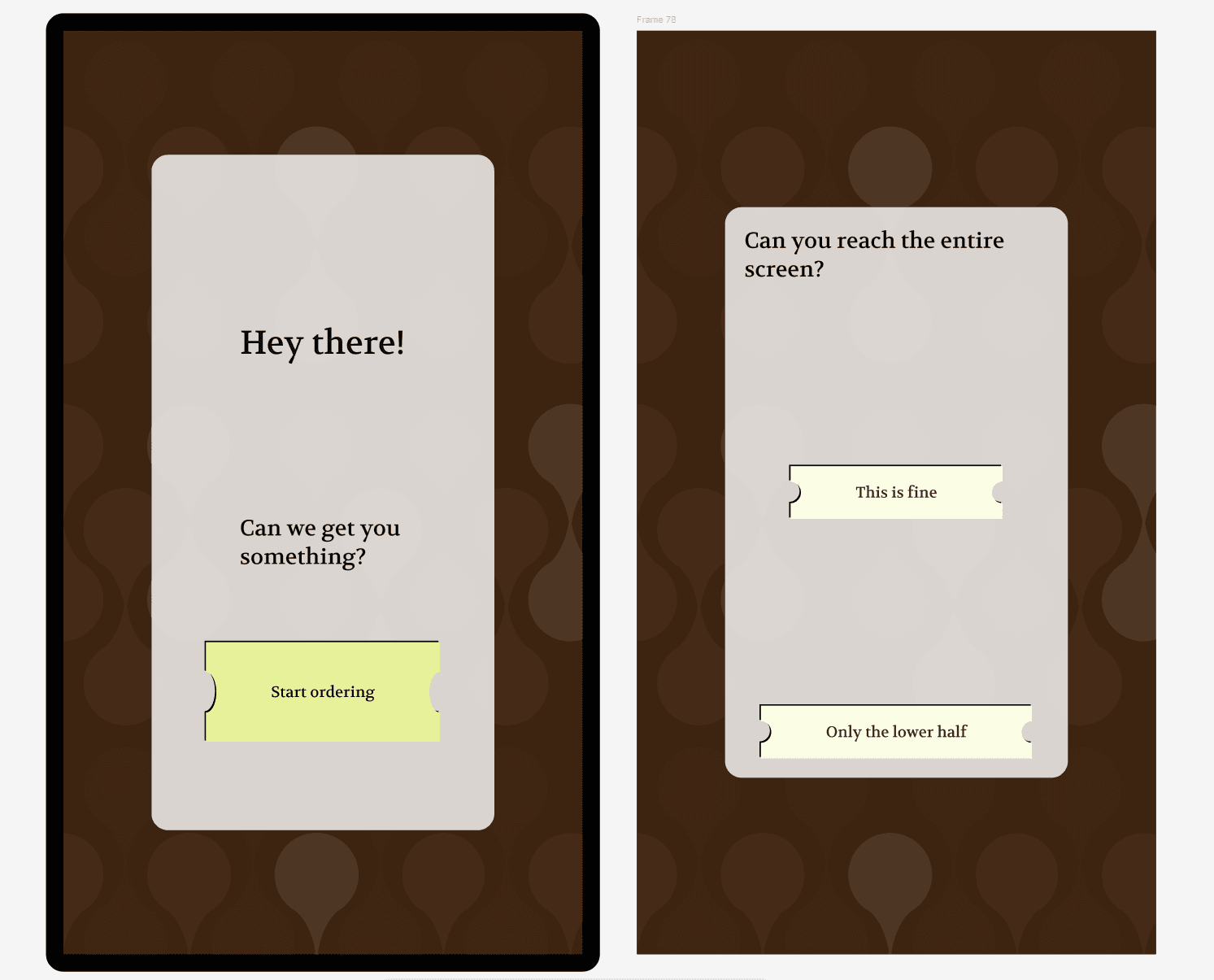
The first interaction had to work for the most constrained user. The bottom half of the screen became the only reliable touch zone. The question of user height was made mandatory and upfront to adapt the experience accordingly.
User flow
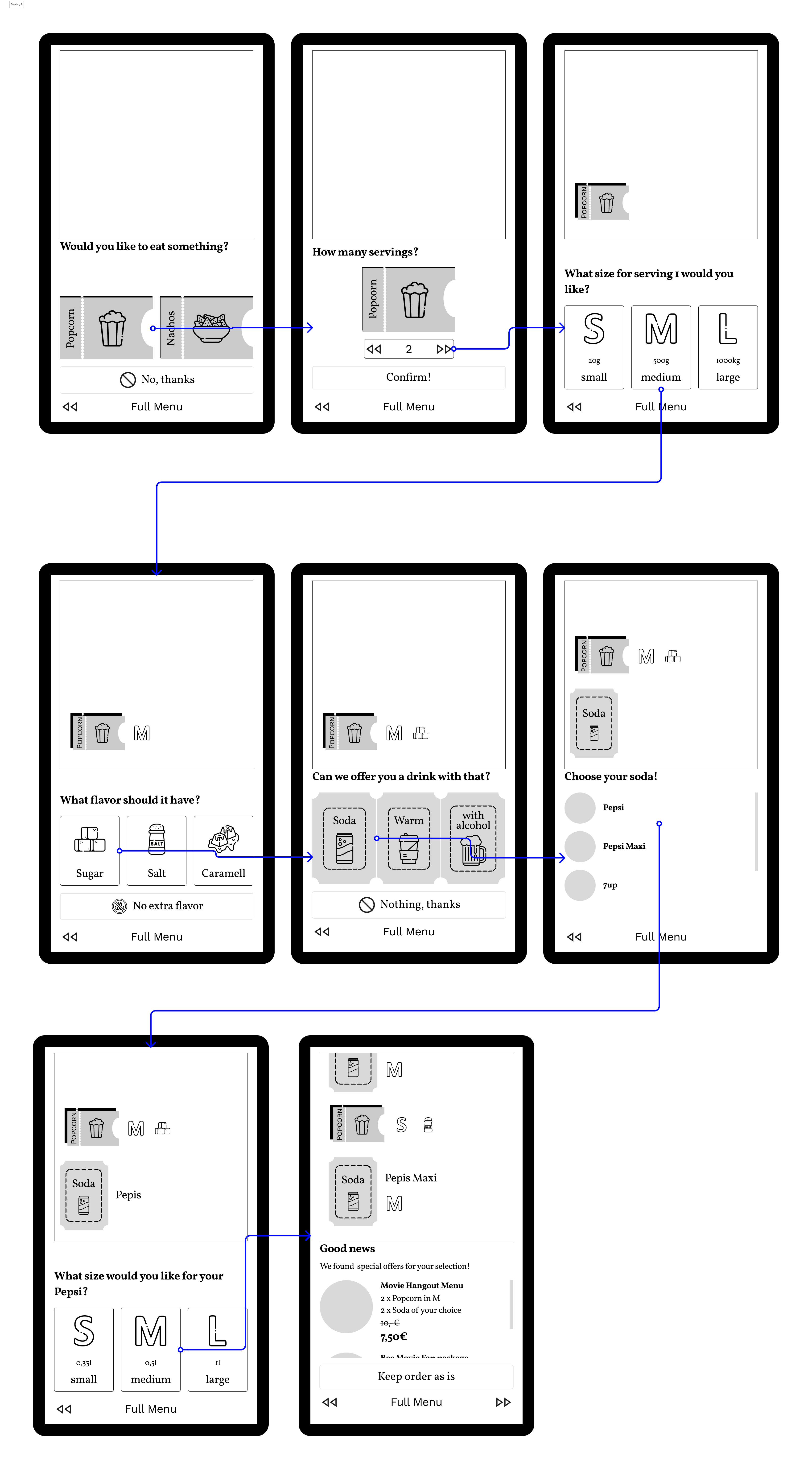
Once the bottom half was established as the primary interaction zone, the top half was freed up for visualization only — information, wayfinding, imagery. Interaction and display were cleanly separated.
Results
A kiosk flow that works for wheelchair users, children, and shorter adults without a separate "accessible mode" — accessibility baked into the primary experience.